
ITT Success Stories Episode 1: Akash
By Professional Studies Staff
| Zoe Li |
You’re listening to ITT success stories, the podcast about our ITT graduates. The ITT program at queen’s professional studies helps prepare internationally trained teachers to teach in Canada. I’m your host Zoe Li, thanks for tuning in. Hi Akash! Thanks for coming on today. Why don't you start by introducing yourself to the audience at home? |
| Akashdeep Singh |
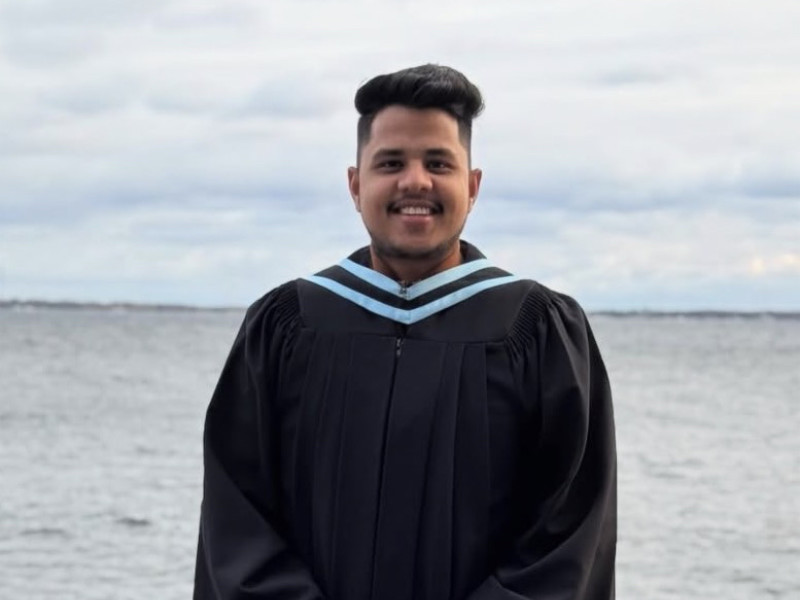
All right. Thank you for choosing me for this podcast. So my name is Akashdeep Singh and I am from a small town in Punjab, India and I completed my Bachelor of Science in India and Bachelor of Education. And then I choose to move to Canada in September 2023. |
| Zoe Li |
Can you tell me a little bit about what you do today, what your position is and where you work? |
| Akashdeep Singh |
So right now I am working in Sachigo Lake First Nation community and I am a junior kindergarten teacher here. |
| Zoe Li |
And how long have you been in the position for? |
| Akashdeep Singh |
I started this position like in February and I finished my ITT program in December, so it's just take me like one month to get this job. |
| Zoe Li |
So moving back to you, your journey coming to Canada, what kind of motivated you to come to Canada in the 1st place and maybe also enroll in the ITT program? |
| Akashdeep Singh |
So like when I finished my Bachelor of Education in India, I want to pursue my Master of Education first. But like as you know, like doing Master in Canada is quite expensive for me. And it is out of my budget. Then I find that program internationally trained teachers from Queen's University. And as you know, Queen's is a very reputable university. So I decided to choose that program for me. And then I started my journey in 2023 September. This program is very very helpful for me and today I am grateful that I made the decision. Now I achieved my goal of becoming a teacher in Canada. |
| Zoe Li |
And would you say the ITT program— How has it supported your journey as an educator, you know, what did you learn there? How did it affect your teaching style? |
| Akashdeep Singh |
So in India I taught for only 4 months. In india teaching is more teacher-oriented. There are less hands-on activities. Like teachers just follow the curriculum and there are textbooks that students read. But in canada It is totally different. So when I joined the ITT program my instructors helped me a lot and they are like very experienced instructors. Some of them are principals some of them have been teaching for more than twenty years in Canada. So they helped me a lot with teaching in Canada. We have seven different AQs in the ITT program. The first one is orientation to teaching in Canada. So that helped me to know how things work in the Canadian Education system. So here in Canada the teaching is more student oriented. There are more hands on activity and more focus on practicals than theoreticals. When I teach in India it taught me how to discipline the curriculum, and how to focus on curriculum but in Canada I learned how to make students more engaged in the classroom. So both of my experiences helped me to achieve my goal. Also I would like to mention that in the ITT program, we have around 113 students from different countries. Some of them are from China and most of them are from India. Different parts of India, so they are also very experienced. Some of them has like 12 or 15 year of teaching experience. Some of them are new like me, but I learned a lot from them as well because when you are in classroom together, so you share your experience, you share your knowledge. So that is also very helpful for me. |
| Zoe Li |
Yeah. So there's a lot of mentorship opportunities, basically. Speaking of adjustments coming to Canada, broadly speaking, not just within your teaching careers, what were some of maybe challenges or just adjustments you had to make culturally or just to the new environment? What was your journey like? |
| Akashdeep Singh |
Yeah. So when I arrive in Canada, yeah, that's true. Like it's a cultural shock for me, like because it is totally different and I never like went outside India before that. So adjusting to new culture is little bit difficult, but. I would say like it it just take like a couple of months to get settled down here because when we are doing ITT programs, so Queen's University are supporting us a lot. They help us in finding accommodation. They help us to like finding like good accommodation if we don't get like the good accommodation over there and they are helping us like to know about the area around like we have. I still remember on. Orientation day on 7th September, we had a like a Kingston tour around the city, so that is led by the program coordinator. So they help us a lot to know about the things where we can get like essential things. For us. So they supported us a lot. Yeah, I would like to say that, yeah. |
| Zoe Li |
All right. Yeah, sounds good. So how do you think your transition from the ITT program to your job currently at Sachigo Lake First Nation? What was the recruiting process? You know, how did you kind of end up there? |
| Akashdeep Singh |
OK, so when I finish my ITT program, so I start like I I I'm waiting for my OCT license first. So as I know like as I already told like my instructors and the program coordinator, they are supporting us throughout the ITT program. So they helped us. They arranged a workshop with OCT like how you can apply OCT license. So and it is like they started in the middle of the program. I would like to say like before the middle of the program. So I applied for my OCT license in March 2024 because it takes. Like around 10 to 11 months to get OCT license. So when I finished my program in December after one month like in January I got my OCT license. After getting my OCT license like I start applying for the job on apply to education website which already like are. Program coordinator and our instructor supported us like how we can find a job, how you can search or create an account on apply to education website. So yeah, like when I got my OCT license I started applying for different jobs and I got like. The various like a lot of interview emails and then I appear for interview and this is I guess third or fourth interview which I got the reply like I'm gonna get selected. So then I just packed my bag from Kingston and move it to the Sachigo Lake. |
| Zoe Li |
Yeah, that must have been very exciting. So what was your experience then going to Sachigo Lake, you know, another new environment other than Canada? |
| Akashdeep Singh |
Honestly speaking, yeah, I never imagined like there is an area like Sachigo Lake or the Northern Ontario, like there are such communities because this is completely new for me. I never imagined that kind of like place in the Canada. So it is totally different. I still remember like when I first time coming to Sachigo Lake. So we came through through Soul Lookout. It is a small town in North Ontario which is the hub of all these communities. Small communities. So Sachigo Lake is flying in communities, so no Rd. accesses to this to Sachigo Lake. So I waited around 10 hours at SU Lookout Airport to get my flight for Sachigo Lake. So that time I'm like little scared like where I'm going like I have no idea. But honestly speaking, people here are very welcoming and they are very supportive. So they helped me a lot. They my principal came to the airport to pick me up and she supported me. Like and I got a like a nice accommodation also there. So yeah, the community is very supportive and they provide a lot of facilities to their teachers. |
| Zoe Li |
All right, so Speaking of the community, how did you get to know the people in the community? How did you integrate yourself into their circle? |
| Akashdeep Singh |
So like, yeah, in Sachigo Lake or in any communities, it's like it is like in the starting it is very difficult to like talk with people. So the best thing is like you have to build a relationship with them like you have to build like a relationship with them and build trust with them. So you have to like be respectful and be a good listener because they used to tell a lot of stories to you. So you have to be patient and be a good listener to know about. OK, so this things, but slowly with the passage of time when you make a good relation with them, so they are like very friendly and yeah, I am also learning some of the words from their indigenous language because one of the elder he used to come to my class daily like during the break time or after the school and he used to teach me some words so that I can use. |
| Zoe Li |
Oh, that's great. |
| Akashdeep Singh |
Use that like with my kindergarten student as well, like when it's home time, they want to go home. So I would say, OK, it's time to go key win. So key win is like their word to say home. So yeah, so it's good being here, like building relations and. |
| Zoe Li |
Yeah. |
| Akashdeep Singh |
Getting experience that is good for me, yeah. |
| Zoe Li |
So, yeah, so when you're trying to connect with these students, right, and you learn their language, how has the experience been in general with your students, you know, connecting with them and learning more about them? |
| Akashdeep Singh |
Like with students, as I'm teaching kindergarten student here, so they are very young. So before students I have to make a good like relation with their families or their guardians. Because when they are like they know like OK, so there is a new teacher and he is creating a safe and welcoming environment for the students. So they start sending the student to the classroom because the biggest challenge in these communities are like show like less attendance. The students like they come to school very often. Like they only come to school if they found it interesting or if teacher is doing something good or if teacher is friendly with them. So right now, yeah, I like it's been like around 8 to 9 months over here, so right now, you know, I build a good relation, like positive relation. So students are getting into my classroom. And yeah, so I love my student as well because as I already told you, like I only teach in India for four months and this is completely first year teaching experience for me. So yeah, that's. |
| Zoe Li |
And I know you mentioned you only worked in India for, yeah, four months, but in your time there, have you noticed any major differences between the classrooms in India versus at Sachigo Lake? |
| Akashdeep Singh |
India is totally teacher oriented focus there. But like here like you have a lot of hands on activities. So as being a kindergarten teacher, you know, like I have to sometimes dance in the classroom. We do freeze dance, floor is lava, so it's like a fun and good experience for me. |
| Zoe Li |
Yeah, and these are just, I guess, strategies to keep your students engaged with the material. All right. So why don't you tell me a little bit about just your day-to-day experience living in an isolated, you know, fly in community, maybe a little bit away from the rest of the world. |
| Akashdeep Singh |
OK, so here my day begins at like 8:30. I arrive at school like I prepare my classroom, set up my classroom and student arrive at 8:45 or sometime 8:50. So I welcome them. I greet them by using their name as well because they feel like more engaged when I use their names. So yeah, at 9:00 AM the classes begin. So we have different literacy block, numeracy block, then we use read aloud. Session and we have like lunch time at 12 PM 12 to one. So mostly like students here in community student go home for lunch. So and we live like very close to school so we also go home for lunch. Sometime like when it is like there is some meeting or any other session, so we stay in staff room and after that like from Monday to Thursday, it's almost the same routine. But on Friday we go to like there is only one store, northern store. We go on Friday to buy some groceries because. Because in northern store the grocery arrive like fresh grocery arrive on Thursday. So we used to go on Friday to get the grocery for us. And yes, that's true like it's totally isolated community. So this year I'm glad like we have Starlink here. So we are connected with our family and friends. Uh, around the world. But last year there is no starlink. There is only like a wired Internet that is called like community Internet. So if something like technical problem is there, so like we are totally out. Like we are, we have no connection to the world. So that is something like scary for me last year. But like as you know like technology is going. So I am glad we have Starlink this year. So it's not a problem. And other than that like it is like yeah the you can't predict the weather in these communities and like today also it's heavy snow here and I thought it gonna be worse in coming few week, few more weeks. So yeah, you have to be prepared and like for any kind of situation in these communities. So like as I already mentioned, we have 113 student group. So right now most of the student got their teaching job. And they are all around the like communities. So we have that group like because of the ITT program because we connected and during that program. So we we became classmate, we share our experience. So right now we are. Move from classmate to a colleague. So every weekend we used to call our friends like how things going on in your communities. So sometimes you learn from their experience and you know in teaching not every day is good. Sometimes you have had a bad day. Then you can share and ask for help from your fellow teachers like how I can do this one. So yeah, like in every community right now, the ITT students are there to help us. |
| Zoe Li |
That's really great. Yeah. So there's a bit of a built in network for ITT students. All right, I don't want to take up too much of your time, but before I let you go, for students who are in the ITT program or not in the ITT program, teachers who are considering maybe going to work up north with indigenous communities, what advice would you offer them? |
| Akashdeep Singh |
I would like to say that students who want to pursue ITT program, I will go with that first. Like ITT program is the best way to achieve your teaching goal in Canada. Honestly speaking like before like when I come to Canada. I'm not brave enough to be like to be a teacher in Canada, but ITT program helped me to achieve that because the instructors support you. You get support from your classmates as well. So they boost up my confidence level and then I thought like, yeah, I should try like I applied for OCT and things going like good for me till now and the students who want to pursue their goal like teaching career up north. I would just like to say like they should be ready for any kind of like adversity. Like they may have to face different challenges here, but communities are really supportive and they support their teachers. So you just have to be like be patient in the starting and be a good listener in a starting and slowly when you achieve that bond like with community people. So yeah, they support you and moreover like the boards who hired for the up north communities they support their teachers very well. So this is all I want to say. |
| Zoe Li |
Yeah, sounds good. All right. Well, Akash, it's been so lovely to have you on and thank you for taking the time to speak with me today. |
| Akashdeep Singh |
Thank you so much. |
| Zoe Li |
That’s it for this week’s episode of ITT success stories. This show is produced by Queen’s university Professional Studies, I’m your host Zoe Li. Thank you for listening. |