
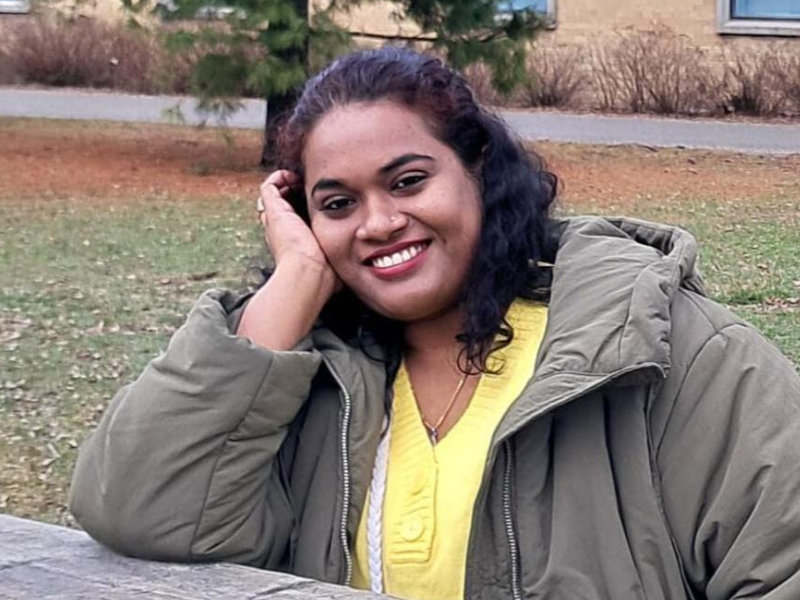
ITT Success Stories Episode 3: Neenu
By Professional Studies Staff
| Zoe Li |
You’re listening to ITT success stories, the podcast about our ITT graduates. The ITT program at queen’s professional studies helps prepare internationally trained teachers to teach in Canada. I’m your host Zoe Li, thanks for tuning in. Hi Neenu, thanks for coming on today. Why don’t you start by introducing yourself to the listeners at home. |
| Neenu James |
So as you called, my name is Neenu. Neenu James, actually. So I'm an Indian. I'm from the southern part of India. So I've been a teacher for around 8 to 9 years. I've taught a year in India, then I moved to Kuwait. Kuwait, I married and then I moved to Kuwait and then I was teaching there as well. So it was a multicultural community there. That is where I always had a dream of moving abroad and things like that. So I was an English teacher there, so, but it was stagnant, so I wanted to move. I always had a dream like to move abroad and then because I was attracted by the Canadian system of education, that is why I moved. It was difficult initially. It was very, very difficult moving, especially my parents and I have a daughter. She's five years old. She was in India. She's in India with my parents. Parents and my husband was in Kuwait. So managing three different time zones was really difficult. But as we say, if you have a heart in it, then your dream will find a way. So that is basically about me. And right now I'm teaching in Manitoba as one of the schools. I'm teaching as a middle school, middle school teacher. So I have experience teaching graduates, the elementary and middle school and high school. Cool. So it's basically everything. But I chose to be with the middle schoolers and I'm OCD certified in the middle school, so middle years. So it's that's about me, yeah. |
| Zoe Li |
I see. All right. So you mentioned that you felt it was stagnant and you were drawn to the culture in Canada. Was there something that also drew you to the ITT program to come and study at Queen's specifically? |
| Neenu James |
I wanted to be at the best university. First of all, I had another opportunity, other opportunities, but I my mind was set on something specific and I was looking for it for different programs. But the thing is, if I had to do different programs, it was like I was already B-ed certified in India. So I didn't want to repeat that again. That was one option. Another option was Lakehead University. It was another option where I had to do my M Ed. So that was way too much. I just wanted to upgrade my studies and upgrade myself to the Canadian experience. So ITT, I think ITT program we get 7 AQs altogether. So that is a good addition to my to my educational experience and things like that. So I that is why I specifically chose this. Program. So by the end of the by the end of two years, 16 months, you would add to your resume 7 AQ's, which most of the teachers would get in seven years. Even our instructors used to say that. So that is why I specifically chose the ITT program. |
| Zoe Li |
What influence did the ITT program have on your teaching style? You know, how did it progress your career as well as your approach to teaching? |
| Neenu James |
So and I talk about teaching. What I've learned is when I was doing my B-ed, when I what I learned was actually the teacher centered approach that is the teacher is the authority there and then because I did my B-ed in India. So in India and where I was teaching in Kuwait in the Middle East, there also I had we had a teacher centered approach that is the students will sit in a particular place and then we instruct them as an authority there. They didn't have a voice. Um, so it had it had its positives too. For instance, we had around 35 students class control. I could control any crowd. You could control a high school class with 35 to 40 students. So that was the positive thing. But I always, uh, was drawn towards the Canadian system of Education because where you learn the play away method, the project based learning and as well as the it's a student centered approach, especially the IEPs and things like that in India and where I was teaching, we didn't have any particular teacher. Focusing on the IEPs or things like that, everyone had to sit in a single classroom where teacher just had to prepare a single thing for all the students. I wanted that for my daughter. I wanted her to grow up in a situation where she could ask questions, she could learn by doing things. So that is what has actually attracted me to this particular program and the Canadian system of education. |
| Zoe Li |
And how do you think those skills that you've developed, you know, adopting more student centered learning approach has helped you in your career in Canada teaching with indigenous communities? |
| Neenu James |
Teaching with indigenous communities, it's it's another branch I could say because they have initially when my teachers, I mean instructors used to tell me in Canada, especially when they are DD program. During that time they used to talk about the trauma which they have faced and and the teachers had to be. Because the children are very sensitive, teachers had to be equally sensitive to understand how they are to get to know them. Because if you gain their trust, only then you can start teaching them, only then they would listen to you. So, but I thought it was because I I thought initially I could handle everything because. I have taught in different communities like Kuwait is also a place where you have multicultural communities, but there it's they have their parents along with them. They don't have any like traumatic experience, like personal experiences like that, but. It's not like that when you teach an indigenous child, they have had different foster homes. Sometimes they would have, they have had parents, sorry, grandparents raising them. So things like that. So that is not about a particular child, but most of them. But they're not. They don't express that to us. It's not like that. But to get into them, you should know them. For instance, one of my regular students were like he had been absent for a few days. So I was wondering why they're not coming into class, why he's not coming into class and things like that. So I. Wanted to know about what is happening, so we cannot directly approach them. So I was asking around because most of them are connected to one another. That is, you cannot talk about a person to another because sometimes they might be the other person's cousin like that. So I was taking talking to an old teacher there. She said I think she must have like seen their parents and grandparents must be so. So I was talking to her and she said he's with the other grandparent. So that is the reason it's very far and he cannot come. They don't have. So even though the child wants to come come to school, it's hard for them to like it's not there, which is not based on there. So that's the thing. So you have to it's not like the regular classes where your parent pushes you to school and and then so when when he when a particular child who's been absenting for so long when he comes back, we'll have to repeat the things. Over again. So if we have given a worksheet or if we have given a work, we have to repeat the things over and over again. So that's one thing where it's a little bit difficult. But also we had during the COVID times we had other technologies and things like that where we could attend online classes. Even if they're willing to attend the online classes, it's maybe in at different places and it's connection and the Internet is slow and things like that. So it's very difficult for them to attend the class. So if even if you're teaching a grade eight student, you have to take a step back. Maybe you have to teach them the class. Grade 7 or 8 portion before you start covering the actual Grade 8 portion. So it's extra effort on the teacher, yes, but the students are very loving and they're not exposed to the outer world most of the time. So they know each other very well. They know their stories. They would come to you only if you are going to their level and gaining their trust. As my instructors has told me, it's the difficult part because sometimes most of the teachers from. Outside they come in and then they leave. So for them it's very difficult to trust a person and because they feel that oh, this teacher must be like staying for a short period and then they go. So. So that's the situation of indigent school. But they are, as I said. They're very loving and food, other things like when you come to food and things like that, they consider us as family, so they don't sell food. They bring us if they get an extra fish. For instance, fish is very common here. They go for fishing, so they bring. It to you, you don't have to go asking for it or buy things. So and things are quite expensive here, but they have subsidies on things like basic things like bread, butter, milk and things like that, so. It's quite interesting and those who like adventure, it's a lot of adventurous, so yeah. |
| Zoe Li |
Yeah, it sounds like the community is very tight knit. Everyone's very involved with one another. What was your experience breaking into that very tight knit community? |
| Neenu James |
Yes, exactly. The initially when you go in they would like they would not approach you thinking that what will you think of them and things like that. But what I what what step I took was that I attended every community meeting. They most because school is 1. A big what do you say is like a place to socialize and things like. So when you sorry, when you go into the store or there's a national store here, when you go into the store, sorry, northern store, national store, it's northern store when you go into the store itself. You the people will know that you are a teacher, a new teacher here because as you said it's closely knit and it's like they come and talk to you regarding things like what you need and all those and what step I took was I was talking about that then I diverted so. In the school, if there is, if there is a death or things like that, it happens quite often. So they what they do is they open the school for the prayer meetings and things like that, so. And food. OK, so you have to go in and volunteer for the things like that. If we if we want to sit at home, we can do that, but to know them and to get into all this. All these things and get to know them. You have to attend all the community meetings and we had, we had moose. Moose is very common food here. They hunt moose, moose, meat and things like that. So it's like sometimes they feel that whether we would eat their food. They think that we keep a barrier between them and the outer community, but it's not like that when you when you are in through that barrier, then they are like they consider you as one among them. So I've been just here just for two months now. I started in September and it's just two months. But, but I feel like I'm one of them now. So it's yeah, so they are like that. So basically you have to go into the community meetings and I'm a Catholic, so we have a church here. I go to church there also. So it's like. A gathering of people there as well. So, so that is the basic thing. When you sit at home or you don't, you feel that you are not part of them. That's not the way you have to go into them, into the community and then. That's how you move forward. I guess that's one strategy. I yeah, that's one strategy. I found it helpful to talk to them. When you talk to their parents, you, the kids will be more like closer to you. So that's our basic thing, basic motive to move forward, I guess. |
| Zoe Li |
Great strategies. All right. So Speaking of community meetings and events, what would you say has been the most memorable or favorite, most fun community meeting or event you've attended? |
| Neenu James |
Yeah. We have moose that is a it's not a it's it's not a community festival event. It is a it is called the moose fry. They have moose fry, fish fry. They name it in different ways. For instance, we had moose. at school, that is they give us things to cook and the meat, the teachers and the students will gather at a particular place and we cook food for them. So I being new of cooking meat and especially moose meat and things like that, but you know Out. Students can become math teachers. They taught me how to cook food and then we had a a gathering there. So old people, they call the old people from community as elders. Elders are like very respected people here. So they call in elders to teach us how to make their bread. Their bread is called Bannock. And then I tried it for the first time, meaning I made it for the first time with the help of one of the others. So they they'll remember, remember you when they see you outside too. It's not only in the school, so that's how you get to know people. So this was one of the one of the favorite. It's happened. It's called moose fry and then we cook and we ate together. So the kids were also happy. It's not that every student will come for everything. Like I have around 29 students in my class, so most of the days only around 15 students come in, so. And but it they like word of mouth is one thing that they talk to each other and then gradually the number will go up. So that was my favorite event that happened, the community event that happened, yeah. |
| Zoe Li |
Yeah, it sounds fun. All right. Moving away from the festivals, the events on a day-to-day level, right? What is your experience then? What do you do for fun? Just on the weekdays or where do you go out on the weekends? How do you handle the cold? |
| Neenu James |
Yeah, OK, so it just it's just snowed two days back and already the temperature is -18 now today it feels like so. But The thing is the school is very near and then it's just two minutes walk from. Place that I stay. So I it just started. So it's I think fine that you have to cover yourself up, otherwise you cannot survive. And it's cold. I mean cold wind. The wind is very dry so you have to always. Carry a moisturizer, hand creams and things like that. You cannot skip on that. Even though you don't do all these things, you will have to do it when you're here. Then on the day-to-day basis basis, it's like we. Not the going to the northern store is 1 like a picnic for all the teachers because we all go together in in the bus. So that's one thing. And then we have a lot of we had another picnic, a teacher's picnic. Picnic means they mostly go out in the. Evenings and they have. We had like campfire and dancing and singing around. That is another entertainment. Other than that we go for walks. We have different trails towards. There's a beach there down the school, so we not go for a walk every day. But we heard there are bears in that area so we’ve stopped walking in that area. We have a very strong volleyball team in the school. We used to play that, play with them and we have badminton courts. We play that in the evenings, but it's cold now and it's very windy, so we cannot play outside. Mostly we sit at home. We have friends in like friends that is friends who are from the teachers from outside. So we gather most sometimes play cards and games. So that is another thing. So that's how we survive. |
| Zoe Li |
I see. Oh. Have you seen any bears personally? |
| Neenu James |
Yeah. No, but the other teachers from outside have seen it. They say that they don't come towards you unless you disturb them. And now they're all hibernating, I guess so. |
| Zoe Li |
Alright, that's good. You can resume your walks, I guess, so long as they're sleeping. |
| Neenu James |
Yes. |
| Zoe Li |
All right, so it's before I let you go, I have one more question for you. For teachers who are thinking of maybe going to teach in indigenous communities, teach up north, what advice would you give them? |
| Neenu James |
Advice like before that the teachers who are like into the ITD community, I just have to tell them. I always tell the ITD team about this because The thing is we are always in the West Campus, so most of my my friends who are there. They never used to move around the main campus. You know how it is at the main campus, right? I used to scan all the QR codes around. We have a lot of pamphlets and news letters and things like that going on, but nobody scans it. Nobody attends the seminar. Those are all hidden gems, I tell you, because it's like if you find little time because I filled my resume only with the seminars and presentations that I attended at the main campus. They say that we don't have time, but for me it was like it was very as I told. It was very difficult to handle three time zones. Kuwait, my husband, India, my daughter. So it was three different time zones and Canada is totally different. So it was difficult for me to handle things and it was difficult. I was also working two jobs, so. Everything is difficult, but we are sure we have to take up the opportunities. I say, especially when I we had a lot of teaching like teaching is basically at the West Campus. Teachers, students are mostly in the West Campus, but most of the seminars and presentations and things like that. That are at the main campus, so they don't move around. I guess they just be stagnant. They and they sometimes complain that it's we don't have much interest campus happening, but it's basically they have to scan QR codes and walk around because it's just a lot to explore at Queens. And I miss that because I used to keep myself occupied because I miss my daughter. I miss my family. So Amy at the School of English, she used to always tell me, like, how do you manage? So I said I I cut it off. I cut off my family because I'm here. I can't. Focus on them rather than waste my time. I can't do that because it just adds to my pain. So I feel like always you have to engage yourself with something. OK, that's it. And for the indigenous communities, when I was actually interested in. Coming that is when I I scanned a QR code and I got into the STEM actual Thompson Island camp. That is how I got into know more about the indigenous communities and how their teachings and things like that. They're they have 7 grandfather teachings which they have basically. Like I mean basic their their background is background of teaching is basically 7 grandfather teachings and that includes everything wisdom, love, respect, courage, honesty, humility and truth. So indigenous teachings are basically on that, basically on that. But uh, as I'm teaching in Manitoba or if we're teaching in Ontario, everywhere you have indigenous communities. Sometimes we feel like they are teaching basic based on only their teachings. It's not like that. They are based on the Manitoba curriculum or based on the entire curriculum. They are based on that. There's nothing much of a difference. Only thing is the students are more loving. That is what I feel. Like they listen to you when they gain, when you can, if you can gain your trust. And it is, yes, difficult moving away from all the entertainments and all the things that are happening on the mainland, moving to a different. A place it's difficult, but if you can survive for two months, I think you can survive because they are like very loving and mine is a flying community. We have communities which you can access through Rd. but I feel like flying communities sometimes. When you think about flying communities, it's we feel that you're very far across, but it's not like that. They provide you with everything. So housing, we have a full-fledged house with all facilities in here. The only thing is you're living on an island, but they provide you with everything. I feel that some of my friends have moved into the drive-in communities. We have more more facilities than what they have, even though they are in the drive-in community. So I think basically it's the trust and the love you can give your kids anywhere. Kids are all the same, so you get a lot of vibrant energy from them and it's kind of infectious. So that's what I feel. |
| Zoe Li |
OK, yeah, that sounds great. And I have to agree about the point on the events on main campus. As someone living on main campus, there's always something going on. So yes, if there's. |
| Neenu James |
Yes, there's always something like that. |
| Zoe Li |
Yeah, any ITT students listening, come to main campus. There's tons of events everywhere. Alright, well. |
| Neenu James |
Exactly. I was actually. I was actually in the. I forgot the name. I was mentoring for a year, but that was that was open to everyone. But nobody, nobody came to know about it. But I knew it because I was always at Stoffers. And then after school I at least I spent made sure I particularly spend an hour at Stauffer and then and all the libraries. So I changed libraries everywhere, even the science library. I used to go to the science library even though I'm not a science based. So if an IT student is listening to this, please go explore yourself. Main campus has a lot of opportunities. At least something is going on every day. So I was at SAS. I was a mentor at SAS. So I was mentoring and then I even the I was even the speaker at the Education Week. We had a podcast, so I was one of the speakers. So how did I add this to my resume? Because I moved around scanning QR QR codes around. So, so ask. You will get a lot of things from queens. |
| Zoe Li |
Yeah, yeah, that's really great. I'm sure people in the ITT program, that's something they can put to use. Well, Neenu, it's been so lovely to have you on. Thank you so much for coming and have a lovely rest of your week or weekend, I guess. That’s it for this week’s episode of ITT success stories. This show is produced by Queen’s university Professional Studies, I’m your host Zoe Li. Thank you for listening. |